How to Watch Live NBA Games in 2026: Complete 4K 60 FPS IPTV Streaming Guide
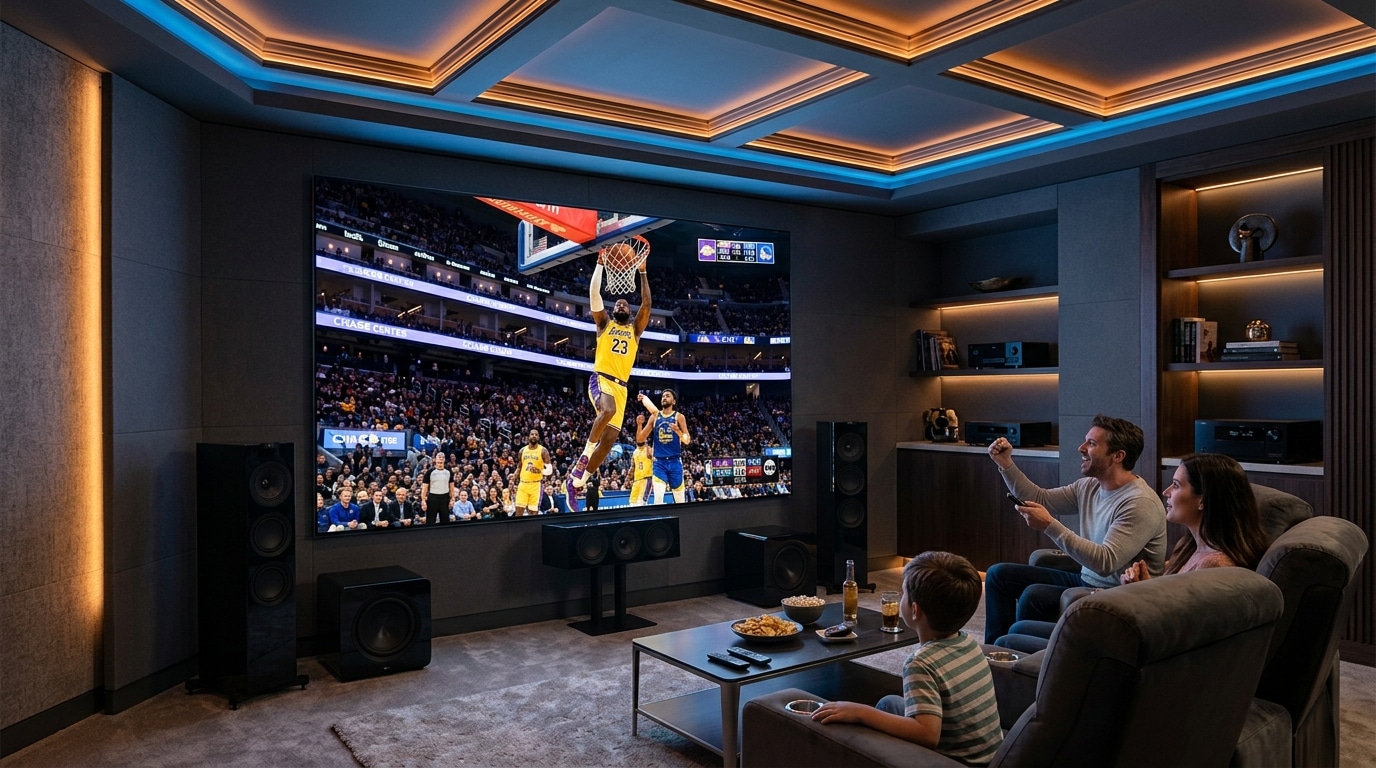
Watching the NBA from tip-off in October through the NBA Finals in June has become one of the most fragmented, frustrating, and expensive experiences in modern sports fandom.
Just a few years ago, catching your favorite basketball team required a standard cable package. Today, the NBA broadcast landscape is fractured across an overwhelming maze of national television networks, regional sports networks (RSNs), premium digital passes, and direct-to-consumer streaming subscriptions.
To watch every single game featuring a superstar like LeBron James, Stephen Curry, Luka Dončić, or Victor Wembanyama, a die-hard fan is expected to subscribe to multiple costly platforms simultaneously: ABC, ESPN, TNT Sports, NBA TV, and local regional networks like FanDuel Sports Network (formerly Bally Sports), the YES Network, Spectrum SportsNet, or NBC Sports Regional.
Even if you pay hundreds of dollars per season for official streaming packages like NBA League Pass, you quickly run directly into the single most infuriating barrier in televised basketball: geographical blackout restrictions.
If you live within your team's designated home market, official streaming apps detect your IP address and block live broadcasts of your local team, forcing you back to outdated cable contracts. Furthermore, nationally televised games broadcast on ESPN or TNT are entirely blacked out on League Pass in many territories.
Internet Protocol Television (IPTV) has emerged as the definitive solution for basketball fans who refuse to endure blackout locks, divided subscription bills, and low-bitrate streams.
A high-performance service like Reflexsat IPTV consolidates every NBA broadcast into a single, high-definition interface: all 82 regular-season games per team, the NBA Cup In-Season Tournament, All-Star Weekend, the Play-In Tournament, and every round of the NBA Playoffs in true 1080p and 4K at a fluid 60 frames per second.
This comprehensive guide covers everything you need to build the ultimate NBA streaming setup in 2026: navigating broadcast networks, bypassing blackout restrictions, fine-tuning your player for fast-break 60 FPS motion, and troubleshooting streaming issues before tip-off.
Experience Reflexsat IPTV
Upgrade your streaming with satellite-grade, anti-freeze 10.0 infrastructure. Over 50,000 live channels, 4K 60FPS sports, and 200,000+ VODs.
Quick Summary: The Essential NBA IPTV Streaming Blueprint
If you want to get your streaming setup ready before tonight's games, follow this core checklist:
- Secure Dedicated Sports Infrastructure: Select an IPTV provider that maintains dedicated 60 FPS sports server clusters with CDN edge caching rather than budget resellers that buffer during fourth-quarter traffic spikes.
- Eliminate All Blackout Barriers: Access both Home and Away commentary feeds for every matchup, guaranteeing live viewing regardless of your physical location.
- Insist on True 60 FPS Video: Never watch basketball at 30 frames per second. Fast-paced court movement, perimeter ball rotation, and fast-breaks require a minimum of 50 to 60 FPS to prevent motion blur and eye fatigue.
- Deploy a High-Performance Player: Install TiviMate (on Firestick/Android TV) or Snappier (on Apple TV 4K) to enable Auto Frame Rate (AFR) matching and multi-view capabilities.
- Set Up Multi-Screen Viewing: Utilize player multi-view features to monitor up to four live games simultaneously on busy Tuesday and Friday night slates.
- Ensure Adequate Network Headroom: Maintain a downstream speed of at least 25 to 50 Mbps with wired Ethernet or 5GHz Wi-Fi to prevent micro-drops during clutch fourth-quarter possessions.
The 2026 NBA Broadcast Ecosystem: Rights, Networks, and Blackout Mechanics
To understand why traditional streaming options leave fans underserved, it helps to understand how the National Basketball Association distributes its television broadcast rights.
+-----------------------------------------------------------------------------------+
|                        THE 2026 NBA TELEVISION RIGHTS MATRIX                      |
+-----------------------------------------------------------------------------------+
| Broadcast Tier           | Primary Networks & Outlets       | Blackout Scope      |
+--------------------------+----------------------------------+---------------------+
| National Broadcasts      | ABC, ESPN, TNT Sports, NBA TV    | Blacked out on      |
| (Primetime & Weekends)   |                                  | NBA League Pass     |
+--------------------------+----------------------------------+---------------------+
| Regional Sports Networks | FanDuel Sports Network (Bally),  | Strictly blacked    |
| (RSNs - Local Market)    | Spectrum SportsNet, YES, NBC RSN | out for in-market   |
|                          |                                  | direct streamers    |
+--------------------------+----------------------------------+---------------------+
| International Outlets    | Sky Sports, TNT Sports UK,       | Geographical IP     |
|                          | beIN Sports, Canal+, TSN/Sportsnet| restrictions       |
+--------------------------+----------------------------------+---------------------+
| Comprehensive IPTV       | ALL National + ALL Regional RSNs | ZERO BLACKOUTS      |
| (Reflexsat Infrastructure)| + Dedicated League Pass 24/7 Feeds| (Home & Away Feeds) |
+--------------------------+----------------------------------+---------------------+
1. National Primetime Television Broadcasts
The most anticipated regular-season games, marquee holiday showdowns (such as the traditional Christmas Day five-game marathon), Saturday primetime games, and the entirety of the NBA Playoffs are broadcast across national television networks:
- ABC & ESPN: Home to premier Sunday afternoon broadcasts, Wednesday and Friday doubleheaders, and the exclusive telecast of the NBA Finals.
- TNT Sports: Renowned for its iconic Inside the NBA studio coverage, Tuesday and Thursday primetime doubleheaders, and the NBA All-Star Game.
- NBA TV: Operates 24/7 with daily studio analysis, news updates, historical game archives, and live regular-season matchups throughout the week.
Because these national networks hold exclusive live broadcasting rights for their scheduled matchups, official digital streaming platforms like NBA League Pass are contractually forbidden from streaming these games live in many territories. If an NBA fan relies solely on League Pass, they cannot watch the biggest games of the week.
2. Regional Sports Networks (RSNs) and Local Team Feeds
While national television covers high-profile games, the remaining 70+ games of your favorite franchise's 82-game regular season are broadcast by local Regional Sports Networks.
These networks own the local broadcast territory surrounding each NBA franchise:
- FanDuel Sports Network (formerly Bally Sports): Holds broadcasting agreements for over a dozen franchises, including the Atlanta Hawks, Charlotte Hornets, Cleveland Cavaliers, Detroit Pistons, Indiana Pacers, LA Clippers, Memphis Grizzlies, Miami Heat, Milwaukee Bucks, Minnesota Timberwolves, Oklahoma City Thunder, Orlando Magic, and San Antonio Spurs.
- Spectrum SportsNet: The exclusive local home of the Los Angeles Lakers.
- YES Network: The dedicated local home of the Brooklyn Nets.
- NBC Sports Regional Networks: Telecasts local games for the Boston Celtics, Philadelphia 76ers, Golden State Warriors, and Chicago Bulls.
- Altitude Sports & Entertainment: The regional broadcaster for the Denver Nuggets.
- Marquee Sports / Independent Broadcast Partnerships: Over-the-air and independent networks for teams like the Phoenix Suns and Utah Jazz.
3. The Absurdity of In-Market Blackout Rules
Blackout regulations were originally devised decades ago to protect ticket sales in stadiums and enforce regional cable television monopolies.
If you reside in the Chicago metropolitan area, you are legally designated as an "in-market" viewer for the Chicago Bulls. If you purchase an official digital streaming pass, every single Bulls game broadcast on NBC Sports Chicago will be blacked out in your application. The league's system expects you to purchase an expensive traditional cable or satellite bundle from an approved local provider.
For basketball enthusiasts living in shared broadcast territories—such as parts of Iowa, Nevada, or Kentucky where two to four NBA teams claim regional exclusivity—fans can find themselves blacked out from watching as many as four different franchises simultaneously, even if their local television packages do not carry those channels.
Why IPTV is the Ultimate Solution for NBA Basketball Fans
Modern IPTV services completely demolish the barriers created by fragmented broadcast contracts and geographical blackout maps.
By aggregating digital satellite feeds and direct studio downlinks into a centralized network, Reflexsat IPTV provides a comprehensive viewing environment designed specifically for sports lovers:
1. 100% Blackout-Free Access to Every Game
Because enterprise IPTV server networks route incoming satellite and fiber transmission signals through international data centers, geographic IP geo-blocking does not apply to your viewing experience.
Whether you live in Los Angeles, New York, London, Toronto, Sydney, or Dubai, you have unrestricted, real-time access to every single live basketball game on the schedule.
2. Both Home and Away Broadcast Commentary Feeds
One of the most satisfying elements of watching regional basketball is listening to local play-by-play commentators who know their team intimately.
Watching your team on an away broadcast with biased opposing announcers ruins the viewing experience. Reflexsat IPTV organizes dedicated sports bouquets featuring both the Home and Away broadcast feeds for every NBA matchup:
- Feed A (Home): Local broadcast featuring home team commentary, local sideline reporters, and hometown stadium camera feeds.
- Feed B (Away): Visiting team broadcast featuring traveling commentators and specialized away team graphics.
You decide which commentary crew you want to listen to with a single click on your remote control.
3. Dedicated 24/7 NBA TV and Studio Analysis
In addition to live game telecasts, top-tier IPTV subscriptions include continuous, uncompressed feeds of NBA TV, post-game highlight shows, press conferences, trade deadline marathons, and the NBA G-League showcase.
4. Massive Financial Savings
Consider the traditional alternative:
- Traditional Cable or Satellite TV (with RSN tier): $110 – $160 / month
- Regional Standalone RSN Apps (e.g., FanDuel Sports Network App): $20 / month
- NBA League Pass Premium: $25 / month
- Total Annual Cost: $1,500 – $2,200+ per year
By contrast, a premium Reflexsat IPTV annual subscription costs less than the price of a single month of cable television, delivering every live NBA game alongside over 50,000 international channels, PPV events, and 200,000+ movies and series.
Technical Performance Standards: Why 60 FPS is Non-Negotiable for Basketball
Television streaming is fundamentally about motion rendering. While a static drama or slow-moving interview looks perfectly fine at 24 or 30 frames per second (FPS), basketball is an exceptionally fast, dynamic sport:
- The ball travels at high velocities across three-point arcs.
- Players sprint, cut, and elevate in milliseconds.
- Arenas feature bright court lighting and rapid strobe flashes from courtside photographers.
+-------------------------------------------------------------------------+
|                  30 FPS vs. 60 FPS BASKETBALL STREAMING                 |
+-------------------------------------------------------------------------+
| Specification      | 30 FPS (Low-Tier Budget IPTV) | 60 FPS (Reflexsat VIP Feeds)|
+--------------------+-------------------------------+--------------------+
| Temporal Resolution| 30 images displayed per second| 60 images per sec  |
| Motion Blur        | Severe trailing on fast breaks| Razor-sharp tracking|
| Ball Visibility    | Ball ghosts or disappears on  | Full seam rotation |
|                    | rapid three-point shots       | clearly visible    |
| Eye Fatigue        | High (brain compensates)      | Completely natural |
| Required Bitrate   | 3.0 – 5.0 Mbps                | 12.0 – 18.0 Mbps   |
| Hardware Demand    | Low                           | Modern GPU Decoders|
+-------------------------------------------------------------------------+
The Pitfalls of 30 FPS Sports Streams
Low-quality IPTV resellers frequently take high-bitrate satellite feeds and transcode them down to 30 FPS using aggressive compression algorithms to save server bandwidth costs.
When you watch a 30 FPS basketball stream on a 65-inch 4K television:
- The basketball will appear to "strobe" or leave a ghosting trail as it flies toward the rim.
- Player jerseys and numbers become unreadable during fast-break transitions.
- Camera pans across the crowd produce severe horizontal judder.
The 60 FPS Fluidity Standard
At Reflexsat, our dedicated sports feeds stream at true 59.94 or 60.00 frames per second with high-bitrate H.265 (HEVC) and advanced H.264 profiles.
Every dribble, pass, deflection, and rim-rattling dunk is rendered with smooth, authentic broadcast clarity that matches the live satellite stadium feed.
Step-by-Step Hardware & Software Setup for Live NBA Streaming
To build a professional sports viewing setup that performs reliably throughout the season, pair an enterprise-grade IPTV subscription with the right hardware and player software.
Recommended Hardware Options:
- Amazon Fire TV Stick 4K Max (2nd Gen): Excellent price-to-performance, powerful MediaTek quad-core processor, Wi-Fi 6E support, and seamless TiviMate compatibility.
- Apple TV 4K (3rd Gen, A15 Bionic): The absolute fastest UI navigation on the market, instant channel zapping, and zero thermal throttling.
- Nvidia Shield TV Pro: The ultimate Android TV box, featuring AI-enhanced upscaling that sharpens 1080p sports feeds into crisp 4K imagery.
Step-by-Step Installation: Amazon Firestick & Android TV
For Amazon Firestick and Android TV users, the best application for live sports is TiviMate IPTV Player. Follow these instructions to set it up:
1. Prepare Your Firestick
- Navigate to Settings > My Fire TV > Developer Options.
- If Developer Options is hidden, go to Settings > My Fire TV > About, select your Fire TV device name, and click the center remote button 7 times until you see the message "No need, you are already a developer."
- Return to Developer Options, select Install Unknown Apps, and toggle the Downloader application to ON.
2. Sideload TiviMate
- Launch the Downloader app from your home screen.
- In the URL field, enter the direct code for TiviMate (or visit the official TiviMate site).
- Click Go, download the APK file, and click Install.
3. Configure Your Reflexsat IPTV Credentials
- Open TiviMate and click Add Playlist.
- Select Xtream Codes API.
- Enter your Server URL, Username, and Password provided upon subscribing to Reflexsat IPTV.
- Click Next to let the channel database and program guide synchronize.
4. Optimize TiviMate Playback Settings for Live Sports
To ensure maximum fluidity during games, configure these critical settings:
- Open Settings > Playback.
- Auto Frame Rate (AFR): Toggle to ON. This forces your TV to switch its refresh rate to 60Hz when you open an NBA stream, eliminating micro-stutter.
- Buffer Size: Set to Normal (or Small if connected via a wired Ethernet cable).
- Video Decoder: Verify it is set to Hardware.
For complete device tutorials, read our full IPTV setup and installation guide.
Step-by-Step Installation: Apple TV 4K (tvOS)
If your living room is anchored by an Apple TV 4K, follow this walkthrough using Snappier or IPTVX:
1. Install the Player from the App Store
- Open the native App Store on your Apple TV 4K.
- Search for Snappier (or IPTVX).
- Click Get or Download.
2. Input Your Xtream Codes API Login
- Open the application and choose Add Account > Xtream Codes API.
- Enter your Server URL, Account Username, and Password.
- Allow the Apple TV's A15 Bionic chip to index your sports bouquets and EPG data.
3. Match Content Dynamic Range and Frame Rate
To ensure pristine video playback on tvOS:
- Open Apple TV system Settings > Video and Audio.
- Select Match Content.
- Turn Match Dynamic Range to ON.
- Turn Match Frame Rate to ON.
- This enables Apple TV to dynamically synchronize its HDMI clock with the 60.00 FPS sports broadcast.
Explore our dedicated Apple TV IPTV streaming guide for deep tvOS optimization tips.
Power User Strategy: Multi-Screen Viewing on NBA Game Nights
One of the greatest advantages of modern IPTV software over traditional cable boxes is Multi-View Picture-in-Picture.
On busy NBA nights—such as Wednesday or Friday slates where ten or twelve games tip off within an hour of each other—trying to keep track of multiple close games by constantly changing channels is exhausting.
+-------------------------------------------------------------------------+
|                  TIVIMATE 4-SCREEN MULTI-VIEW SETUP                     |
+-------------------------------------------------------------------------+
| [ SCREEN 1: Lakers vs Celtics ]     | [ SCREEN 2: Warriors vs Nuggets ] |
| (Active Audio Channel - Blue Border)| (Live Video Feed - Silent)        |
|                                     |                                   |
+-------------------------------------+-----------------------------------+
| [ SCREEN 3: Bucks vs 76ers ]        | [ SCREEN 4: Mavs vs Suns ]        |
| (Live Video Feed - Silent)          | (Live Video Feed - Silent)        |
|                                     |                                   |
+-------------------------------------------------------------------------+
How to Configure Multi-View in TiviMate:
- Tune into your primary NBA game of interest.
- Long-press the Select / Center button on your remote to bring up the on-screen playback control menu.
- Select the Multi-View icon (represented by a divided grid).
- Click Add Screen. A secondary viewing window will appear beside your main game.
- Browse your sports bouquet and select your second game.
- Repeat the process to add a third or fourth live stream.
Audio Routing and Focus:
- The screen with the active blue border outputs sound to your soundbar or television speakers.
- To switch audio to a different game during a timeout or commercial break, simply press the directional arrow on your remote to move the blue focus box to the desired screen.
- To expand any game to full-screen mode, press the Select button.
Note: Multi-viewing requires an IPTV subscription tier that permits multiple simultaneous connections. View our 2-device and 3-device subscription plans to ensure your account supports multi-view without stream interruption.
Home Network Optimization: Eliminating Fourth-Quarter Buffering
Nothing destroys a sports fan's evening quite like a stream freezing with fifteen seconds left in a tied game. Live sports streams operate with low latency buffers, making them sensitive to home network instability and internet service provider (ISP) traffic routing.
Follow these technical network optimization steps to guarantee bulletproof streaming:
1. The Superiority of Wired Ethernet Over Wi-Fi
While a Wi-Fi connection might yield high download speeds on an occasional speed test, wireless signals are subject to environmental interference, packet jitter, and micro-burst drops. A dropped packet during a file download simply causes a brief delay; a dropped packet during a live 60 FPS sports stream causes a video freeze.
Whenever possible, connect your streaming device to your home router with a physical Cat6 Ethernet cable. If your Firestick or Chromecast lacks an RJ45 port, purchase an inexpensive USB-to-Ethernet OTG adapter.
2. Bypass ISP Throttling and DNS Filtering
During high-profile sporting events, major residential internet service providers often experience localized bandwidth congestion. Some ISPs actively apply Deep Packet Inspection (DPI) algorithms to throttle streaming video traffic or inject delays into default DNS queries.
To protect your stream:
- Switch to Public DNS Resolvers: In your router or streaming stick settings, replace your ISP's default DNS with Cloudflare (
1.1.1.1and1.0.0.1) or Google (8.8.8.8and8.8.4.4). This ensures instantaneous domain resolution when switching feeds. - Deploy a High-Speed VPN if Necessary: If your ISP aggressively throttles sports streaming traffic during primetime hours, a reputable VPN encrypts your video packets, preventing your ISP from identifying and slowing your connection.
Review our complete breakdown on internet speed requirements for IPTV to test your network's latency, ping, and jitter before the game begins.
30-Team NBA Broadcast and Regional Sports Network Directory
To help you locate your franchise's live telecasts instantly across our IPTV bouquets, use this complete regional network reference directory:
Eastern Conference Broadcast Mappings
| Division | Franchise | Primary Regional Network (RSN) | Over-the-Air / Local Station | National Backup Feeds |
|---|---|---|---|---|
| Atlantic | Boston Celtics | NBC Sports Boston | WSBK / TV38 | ESPN, TNT, ABC, NBA TV |
| Atlantic | Brooklyn Nets | YES Network | WPIX-11 | ESPN, TNT, NBA TV |
| Atlantic | New York Knicks | MSG Network / MSG+ | — | ESPN, TNT, ABC, NBA TV |
| Atlantic | Philadelphia 76ers | NBC Sports Philadelphia | — | ESPN, TNT, NBA TV |
| Atlantic | Toronto Raptors | TSN / Sportsnet (Canada) | — | NBA TV International |
| Central | Chicago Bulls | Chicago Sports Network (CHSN) | CHSN Over-the-Air | ESPN, TNT, NBA TV |
| Central | Cleveland Cavaliers | FanDuel Sports Network Ohio | WUAB 43 | ESPN, TNT, NBA TV |
| Central | Detroit Pistons | FanDuel Sports Network Detroit | WMYD TV20 | ESPN, TNT, NBA TV |
| Central | Indiana Pacers | FanDuel Sports Network Indiana | — | ESPN, TNT, NBA TV |
| Central | Milwaukee Bucks | FanDuel Sports Network Wisconsin | WMLW The M | ESPN, TNT, ABC, NBA TV |
| Southeast | Atlanta Hawks | FanDuel Sports Network Southeast | WPCH Peachtree TV | ESPN, TNT, NBA TV |
| Southeast | Charlotte Hornets | FanDuel Sports Network Southeast | WAXN-TV | ESPN, TNT, NBA TV |
| Southeast | Miami Heat | FanDuel Sports Network Sun | — | ESPN, TNT, ABC, NBA TV |
| Southeast | Orlando Magic | FanDuel Sports Network Florida | — | ESPN, TNT, NBA TV |
| Southeast | Washington Wizards | Monumental Sports Network | — | ESPN, TNT, NBA TV |
Western Conference Broadcast Mappings
| Division | Franchise | Primary Regional Network (RSN) | Over-the-Air / Local Station | National Backup Feeds |
|---|---|---|---|---|
| Northwest | Denver Nuggets | Altitude Sports & Entertainment | KTVD 20 | ESPN, TNT, ABC, NBA TV |
| Northwest | Minnesota Timberwolves | FanDuel Sports Network North | — | ESPN, TNT, NBA TV |
| Northwest | Oklahoma City Thunder | FanDuel Sports Network Oklahoma | KSBI 52 | ESPN, TNT, NBA TV |
| Northwest | Portland Trail Blazers | Rip City Television Network | KATU Charge! | ESPN, TNT, NBA TV |
| Northwest | Utah Jazz | KJZZ 14 (Jazz+ Over-the-Air) | KJZZ-TV | ESPN, TNT, NBA TV |
| Pacific | Golden State Warriors | NBC Sports Bay Area | — | ESPN, TNT, ABC, NBA TV |
| Pacific | LA Clippers | FanDuel Sports Network SoCal | KTLA 5 | ESPN, TNT, NBA TV |
| Pacific | Los Angeles Lakers | Spectrum SportsNet | — | ESPN, TNT, ABC, NBA TV |
| Pacific | Phoenix Suns | Arizona's Family Sports (3TV/AZFS) | KTVK / KPHE | ESPN, TNT, ABC, NBA TV |
| Pacific | Sacramento Kings | NBC Sports California | — | ESPN, TNT, NBA TV |
| Southwest | Dallas Mavericks | KFAA 29 (Mavs TV Over-the-Air) | WFAA / KFAA | ESPN, TNT, ABC, NBA TV |
| Southwest | Houston Rockets | Space City Home Network | — | ESPN, TNT, NBA TV |
| Southwest | Memphis Grizzlies | FanDuel Sports Network Southeast | — | ESPN, TNT, NBA TV |
| Southwest | New Orleans Pelicans | Gulf Coast Sports & Entertainment | WVUE Fox 8 | ESPN, TNT, NBA TV |
| Southwest | San Antonio Spurs | FanDuel Sports Network Southwest | KENS 5 / CW35 | ESPN, TNT, NBA TV |
Television Display Calibration: Optimizing Picture Settings for 60 FPS Basketball
Streaming a pristine 60 FPS broadcast feed is only half the battle; how your television processes that incoming video signal determines whether you experience authentic arena clarity or an unnatural, blurry mess.
Most modern televisions—whether OLED, QLED, or Mini-LED—ship from the factory with aggressive digital processing filters turned on by default. These artificial "enhancements" introduce input lag, destroy motion cadence, and create shimmering artifacts around basketball players during fast breaks.
Follow this television calibration protocol to ensure optimal basketball viewing:
1. Disable Artificial Motion Interpolation ("The Soap Opera Effect")
Every television manufacturer has its own marketing name for frame interpolation algorithms:
- Samsung: Auto Motion Plus or Picture Clarity Settings
- LG: TruMotion
- Sony: Motionflow
- TCL / Hisense: Action Smoothing or Motion Clearness
These algorithms attempt to generate fake intermediate frames between real broadcast frames. When viewing movies filmed at 24 FPS, interpolation makes cinema look like a cheap video recording (the dreaded "soap opera effect").
While some viewers mistakenly believe motion interpolation helps sports, in reality, artificial frame generation cannot process the rapid, erratic trajectory of a basketball. When a guard throws a 40-foot cross-court pass, the interpolation engine gets confused, causing the ball to tear, flicker, or briefly disappear against the court texture.
Recommendation: Turn Motion Interpolation completely OFF, or set De-Judder to 0 and De-Blur to a minimal value (between 1 and 3). Allow your IPTV stream's native 60 FPS frames to render untouched.
2. Enable Black Frame Insertion (BFI) for Razor-Sharp Motion
If your display features Black Frame Insertion (often called OLED Motion Pro, Clearness, or LED Clear Motion), this feature physically pulses the display backlight or inserts blank frames between refresh cycles.
BFI mimics the natural scanning behavior of old CRT monitors and cinema projectors, clearing the human eye's retinal persistence of vision. This makes player jersey numbers, facial expressions, and floor boundaries razor-sharp during explosive fast breaks without introducing digital artifacts.
3. Set Color Temperature to Warm / D65
Factory default picture modes (such as "Vivid" or "Sports Mode") artificially push color temperatures to a harsh, unnatural blue hue (9000K+), making wooden hardwood courts look like pale concrete and distorting jersey colors.
Switch your picture preset to Cinema, Movie, or Filmmaker Mode, and ensure Color Temperature is configured to Warm 50 (or Warm 2). This accurately targets the D65 white point used by broadcast television cameras, making arena floorboards, skin tones, and team uniforms look rich and authentic.
4. Turn Off Ambient Light Sensors and Energy Savings
Modern televisions feature ambient light eco-sensors that dim screen brightness automatically when the room lights are dimmed.
During an intense evening basketball game, sudden scorebug graphics or camera flashes can trigger these sensors, causing distracting brightness pumping. Disable Energy Saving Mode and Eco Sensor entirely to guarantee consistent peak specular highlights on every possession.
Immersive Courtside Audio: Multi-Channel 5.1 Surround vs. Arena Acoustics
Sound is an integral part of the live NBA experience: the distinct squeak of sneakers on polished maple hardwood, the resonant thwack of the ball against the glass backboard, courtside trash talk, referee whistles, and the thunderous roar of eighteen thousand fans as a home team mounts a fourth-quarter comeback.
Low-tier IPTV resellers transcode their audio channels down to mono or low-bitrate 64 kbps AAC stereo, crushing dynamic range and muffling arena acoustics into a flat drone.
Setting Up Multi-Channel Audio Passthrough
High-grade broadcast feeds from Reflexsat IPTV preserve the original multi-channel Dolby Digital (AC3 / E-AC3 5.1) audio tracks:
- Center Channel: Isolates play-by-play and color commentary announcers, ensuring spoken dialogue remains crisp and intelligible even during deafening arena chants.
- Left & Right Front Channels: Deliver arena public address announcements, player introductions, and high-fidelity courtside microphones.
- Surround Channels: Surround your seating position with realistic crowd noise, arena music organs, and defensive chants.
To enable uncompressed audio passthrough:
- In your player app (such as TiviMate), navigate to Settings > Playback > Audio.
- Set Audio Output to Audio Passthrough (or Direct).
- In your streaming stick's system audio menu (Firestick or Apple TV), verify that Surround Sound is set to Best Available or Dolby Digital Plus.
- Connect your streaming device directly to an eARC-compatible soundbar or A/V receiver using a certified high-speed HDMI cable.
Troubleshooting Common NBA Streaming Issues
If you encounter technical hiccups on game night, use this diagnostic matrix to resolve them in seconds:
1. Video Stutters or Jumps Backward
- Symptom: The video plays smoothly for 30 seconds, pauses briefly, jumps back five seconds, and resumes.
- Cause: Your player buffer is running empty due to a temporary network bottleneck, or the server upstream is experiencing brief packet congestion.
- Fix: In your player playback settings, adjust Buffer Size from "None" or "Small" to Normal (2-3 seconds). If the issue persists on a specific channel, switch to the secondary Away feed or the national broadcast equivalent.
2. Audio Commentary is Out of Sync with Video
- Symptom: You hear the sound of the ball hitting the rim before the shooter releases the basketball on screen.
- Cause: Audio and video clock drift, often caused by complex multi-channel audio demuxing.
- Fix: In TiviMate or VLC, open the on-screen playback menu, select Audio Delay, and adjust the slider by +100ms or -100ms until the sound of the dribble aligns precisely with the visual impact on the hardwood.
3. Channel Takes 8+ Seconds to Load
- Symptom: Clicking a channel results in a prolonged black screen or loading spinner before playback starts.
- Cause: Slow DNS resolution or delayed video stream demuxing.
- Fix: Consult our step-by-step diagnostic guide on fixing slow IPTV channel switching to optimize your player's stream formats and cache settings.
4. Picture is Pitch Black, but Commentary Plays Clearly
- Symptom: You can hear the announcers and arena crowd, but your TV screen remains black.
- Cause: Hardware video decoder failure (MediaCodec) trying to render an HEVC stream.
- Fix: Switch your player's video decoder from "Hardware" to "Software" or "VLC Engine". Read our detailed guide on resolving IPTV black screens with sound.
Frequently Asked Questions
Final Verdict: Upgrade Your NBA Season Today
Following the NBA should be about the excitement of buzzer-beaters, rivalry matchups, and championship chases—not navigating broken streaming apps, blackout warnings, and triple-digit cable bills.
By investing in an enterprise-grade streaming setup:
- You eliminate every blackout restriction, gaining unrestricted access to all 82 games per team.
- You enjoy authentic broadcast fluidity with dedicated 50 and 60 FPS high-bitrate feeds.
- You choose your preferred commentary with dedicated Home and Away broadcast options.
- You master game night with multi-screen viewing across every major game on the schedule.
At Reflexsat IPTV, we engineered our sports infrastructure specifically to meet the high demands of passionate sports fans. Backed by Anti-Freeze 10.0 technology, dedicated high-bandwidth server clusters, and 24/7 human support on WhatsApp, we guarantee the smoothest basketball viewing experience in the industry.
Check out our flexible subscription options on our pricing page, browse our full channel lineup, or reach out directly on our live support desk to request your free 24-hour game night trial today.